



By Kent Jarrell
(September 25, 2025) — Pharmacist Greg McKenna, co-owner of Nutmeg Pharmacy in Higganum, is on a crusade to bring down the high costs of prescription drugs. Prices in the U.S. are the highest among developed countries and set to rise more than 9% this year, according to government and industry reports.
McKenna said in an interview that his customers are feeling the pinch. He described one woman who faced a dilemma when paying for a blood thinner prescribed to lessen the risk of a deadly stroke.

“That person had to make a decision between buying a can of tuna or buying a pork chop that night for her supper for protein,” said McKenna. “This stuff is happening day in, day out, multiple times a day in in my pharmacies. What kind of choices are people having to make? Are they going to pay their light bill? Deciding can they get some clothes or they’re going to have to knit the hole in their in their pants? I mean, these things are happening now because the costs of drugs have geometrically increased.”
ASHP, the professional society of hospital pharmacists, attributes rising prices to a variety of factors, including soaring demands for weight-loss drugs, high-cost cancer drugs, new blockbuster drugs, the expansion of patients, which delays distribution of cheaper generic drugs, tariffs, and companies called pharmacy benefit managers (PBMs).
McKenna believes PBMs are one of the most important drivers of cost. PBMs serve as middlemen among pharmaceutical companies, insurance plans and pharmacies. PBMs influence what insurers pay, how pharmacies are reimbursed, and which medicines people can access.
“They serve an important administrative function, but a function that can be done on three percent of the cost of the drug, not, in some cases, 20 percent of the cost of the drug,” said McKenna.
McKenna points to a complex system of rebates where the PBM gets a discount from a pharmaceutical company in exchange for placing the drug on a preferred tier. McKenna calls this a “kickback” scheme because the PBMs keep the rebates and said, “This program of strategically directed rebates to the PBMs has done nothing to lower the cost of prescription products, since it is only shared with the PBM. The PBMs have not used this rebate to lower the cost to the customer, which was its original intended purpose.”
Executives from PBMs have told Congress that drug rebates are discounts that leverage their large purchasing power to negotiate lower prices from manufacturers. Dr. Patrick Conway, CEO of Optum RX, a large PBM owned by United HealthCare Group, which also owns a health insurance company, testified that rebates “ensure patients have access to the safe and effective prescription drugs they need.”
Connecticut’s Democratic U.S. Senators Richard Blumenthal and Chris Murphy have supported efforts to lower drug prices and reform PBM practices. Democratic Congressman Joe Courtney, who represents Haddam, is a co-sponsor of one the House PBM bills and said in a press release from his office, “Currently, PBMs are not complying with the rules that require they disclose the profits they make from deals with drug companies, often leading to bonuses for PBMs and higher costs for patients.”
McKenna is lobbying lawmakers and using the Nutmeg Pharmacy website (https://www.nutmegpharmacy.com/take-action) to raise the visibility of added costs because of PBMs and said a real solution can come only from federal legislation. “Why are we, America, being the piggy bank for both the insurance company to get their kickback and for the pharmaceutical company to keep prices at levels that no one else in the world pays?”
Unless PBMs change their practices on rebates and reimbursements, McKenna predicted he may not be able to afford to offer the full range of brand name pharmaceutical drugs to his customers.
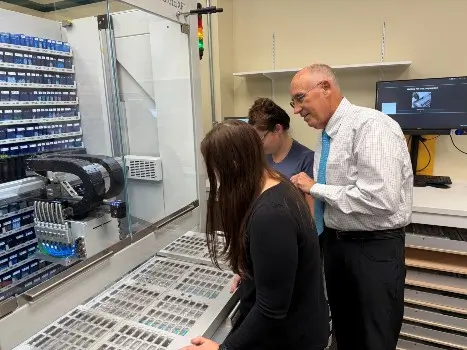
Photo by Kent Jarrell


